

















Every school day after lunch, our custodians clear the several bins of trash that quickly fill up with waste. None of it is separated, none of it is composted, and none of it is recycled. It all goes into the same bins before being sent off to the landfill.
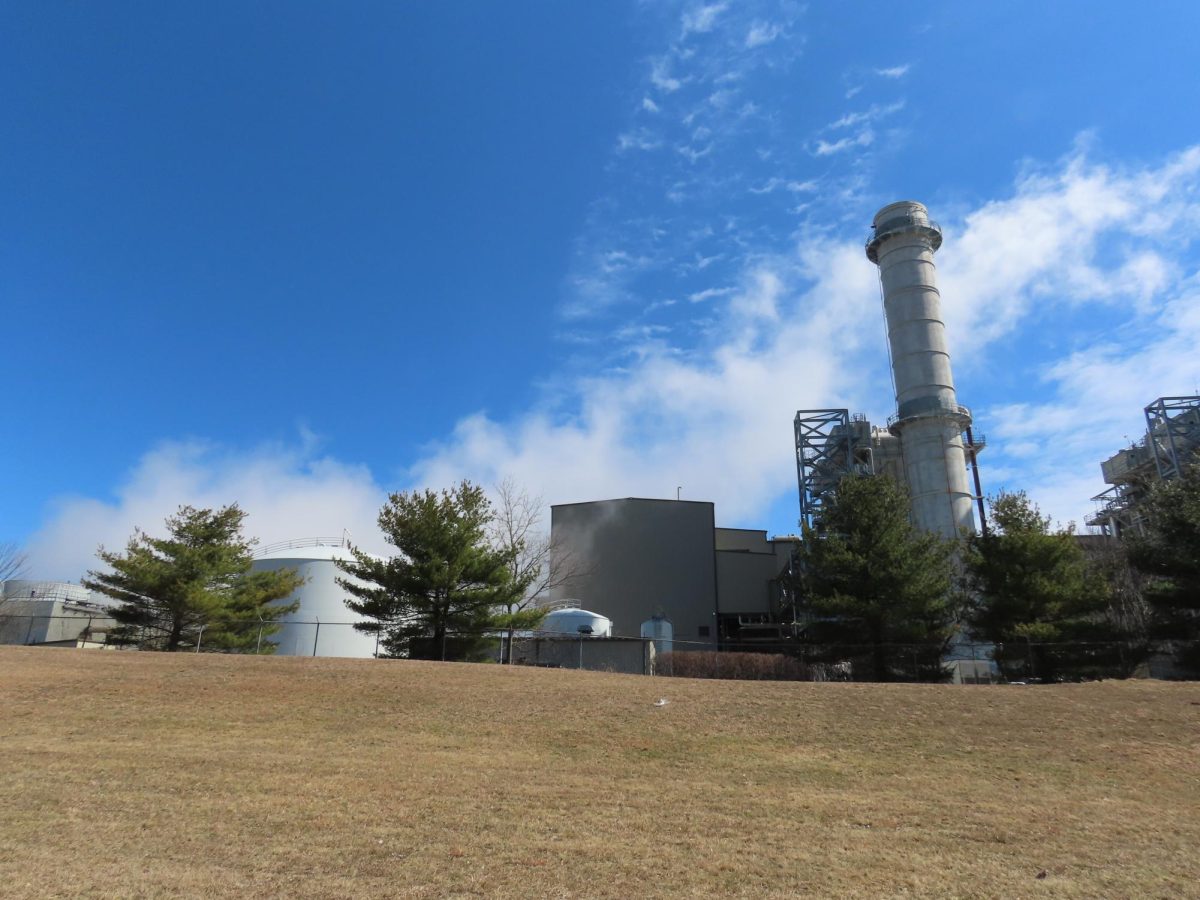
But Rhode Island only has one landfill–and it’s filling up fast. Our landfill is expected to reach capacity in 2046, reflecting the urgent need for the implementation of initiatives to divert as much waste as possible. One main avoidable factor that contributes to so much excess waste in landfills is not composting food waste.
According to a 2015 study by the Rhode Island Resource Recovery Corporation (RIRRC), food waste makes up the highest percentage of waste that ends up in landfills, and about 16% of that can be composted or anaerobically digested. This may not sound like much, but that equates to about 108,800 tons of food waste.
As of now, Lincoln has successfully implemented compost programs in the elementary schools only. The schools have been working with the RIRRC to promote a system called “Share Tables”. Students separate items on their tray into designated recycling, trash, compost, and “shareable” bins. This helps to reduce the amount of waste that ends up in the trash bins, and the shareable bins allow students to have access to any uneaten food. For example, they may be able to grab an unopened bag of chips or an untouched side of fruit.
However, such success in elementary schools sharply contrasts the progress made here at LHS.
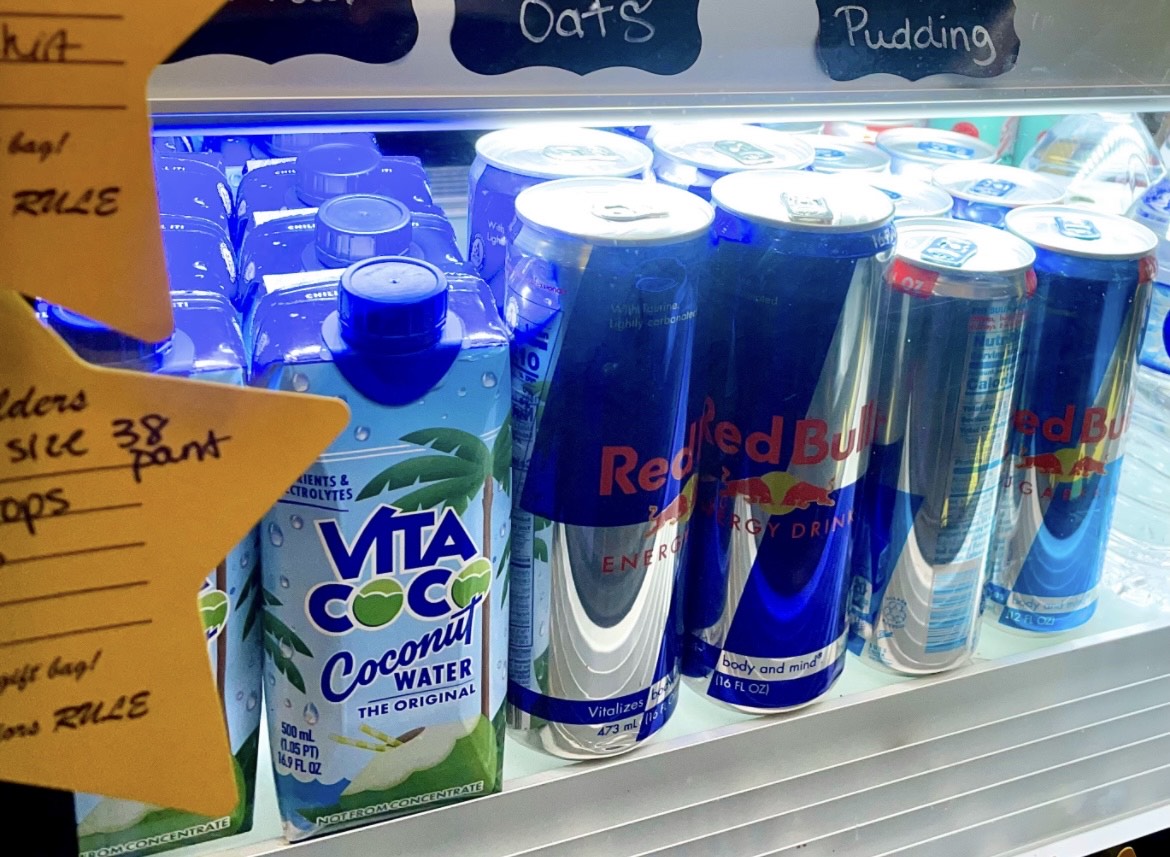
The extent of our high school’s efforts to promote the separation of food waste has been a singular Share Table, rather than the much more complex system of multiple bins that has been established in elementary schools. One fridge was placed in the corner of the cafeteria, where students could choose to put any unopened, unwanted food or drink. This solely focuses on the “shareable” aspect of the program, but does not encourage composting at all. The program also has not been very successful.
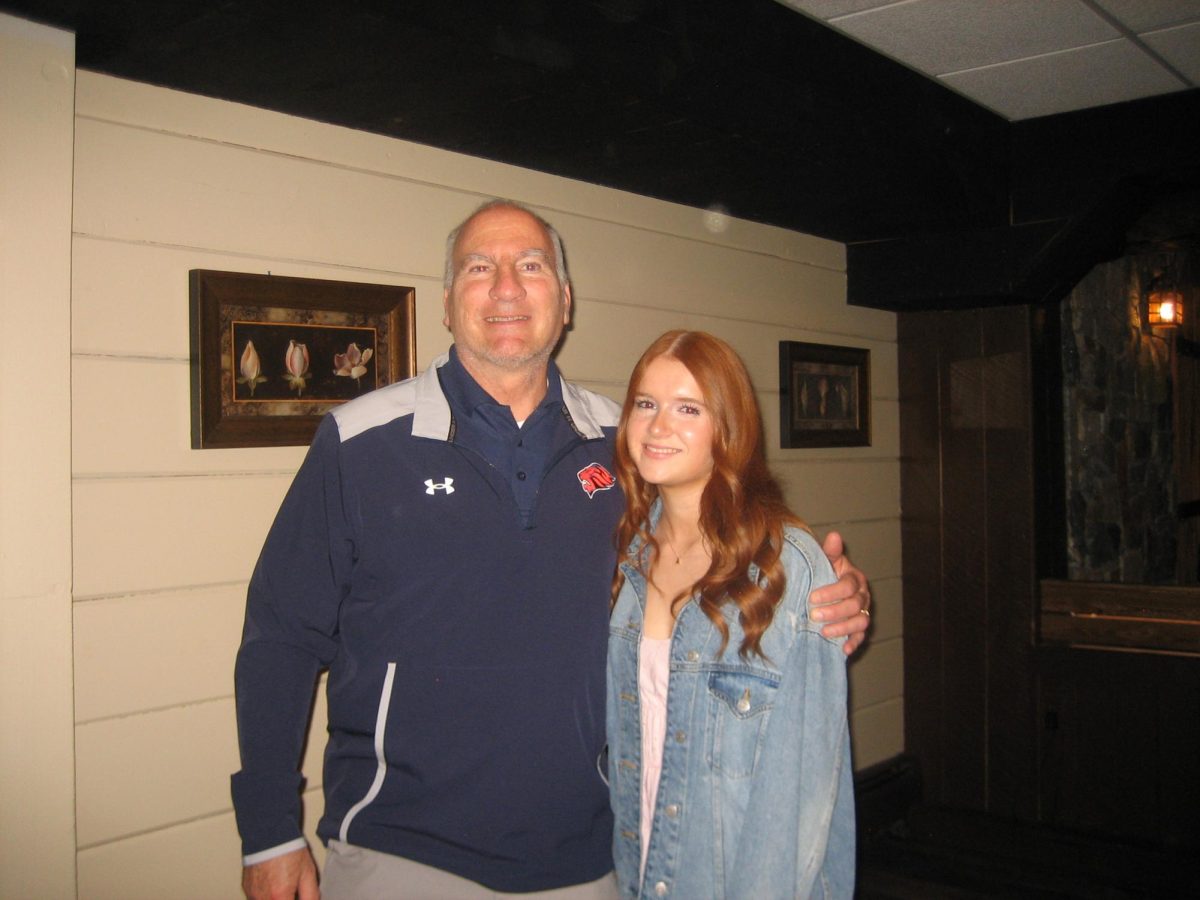
“As Green Team, we used to do regular checks on it and we tried to promote it,” said president of the Green Team, Khadija Kouraj. “It wasn’t much of a success, since I think we lacked the medium to explain to people how the singular Share Table worked.”
The Green Team, a club at LHS, is committed to spreading awareness about environmental issues, as well as promoting ways for our school to be as environmentally conscious as possible. The club has struggled in gaining support from administration and students to expand the Share Tables program at LHS beyond a singular fridge.
“Last year we also pushed really hard to try to get a similar Share Table system at the high school, but that plan sort of fell through,” Kouraj said. “Concerns over how we would manage the ‘teaching period’ with 22-minute long lunches would be a hurdle we’d have to jump. We would also, of course, need close support and approval from LHS administration.”
Portsmouth Schools was the first district to implement their k-12 composting program, launched in 2023. Composting has been successfully integrated in all third and fourth grade lunch periods, and also requires all four of the school district’s prep kitchens to adequately separate food scraps. The district plans to continue working hard toward their goal of having all grade levels composting their lunchroom waste.
The programs currently being practiced in Lincoln’s elementary schools and the Portsmouth district were driven by a statewide law, updated in 2023. It requires all Rhode Island schools within 15 miles of a composting facility that produce at least 30 tons of organic food waste annually to compost food waste, and donate any unserved food to local pantries.
This law applies to many schools in Rhode Island, considering that there are currently 61 active solid waste facilities throughout Rhode Island dedicated to processing waste. Lincoln High School is about 13 miles away from RIRRC, a very large facility involved in composting food waste. Lincoln is already working with RIRRC in their efforts to compost food waste from the elementary schools, so it is entirely possible to do the same for the high school.
Furthermore, a 2025 report from the RI Food Policy Council proposed the establishment of 4 composting facilities to process 90,000 tons of food waste annually, which would allow even more schools across Rhode Island to effectively compost their food waste.
In total, the state’s schools generate about 2,500 tons of food waste each school year. On average, RI high schools generate at least 15.6 pounds of annual organic food waste per student, middle schools waste 39 pounds per student, and elementary schools waste as much as 47 pounds per student. This is all waste that could be diverted through composting programs.
Despite the continuing success of schools such as those in Portsmouth, as well as Lincoln’s elementary schools in their efforts to divert food waste from landfills, a few schools alone isn’t enough to make a difference. The law has no specific penalty outlined for schools who fail to comply with its mandates, and as a result many schools simply do not compost.
A recent survey by the Youth Composting Program Initiative (YCCI) revealed that only 33 percent of the 88 participants in the survey, representing 288 different schools, reported the implementation of some sort of composting program. Additionally, only 27.6 percent of participants described having a strong composting program active in their school. These low numbers reflect a lack of a much-needed urgency to solve this issue among Rhode Island’s schools, and Lincoln High School is no exception.
“The benefits of composting are boundless,” Kouraj said. “It would essentially create a system that cycles through itself. Food waste would be diverted from landfills to then be used to benefit local communities by restoring the soil’s nutrient levels. It would also increase our mindfulness of the amount of food we consume, or don’t consume and therefore throw away. The whole process is very fulfilling.”
However, schools aren’t the only issue. While schools do produce literal tons of waste every year, their widespread failure to compost reflects a wider problem among Rhode Island’s households.
Similar to schools, the vast majority of households across R.I. do not compost, contributing an even more massive amount of food waste that ends up in the landfill each year. It’s just as important for towns to separate food waste collected from households as it is for schools to compost the food waste that their students produce.
“I personally throw away about as much trash at school as I do at home,” Kouraj said. “This means that what we do at home can make a huge difference, especially considering how it adds up over the years.”
In order to actually divert food waste from landfills, separation is key. If the proper systems aren’t enforced to effectively separate compostable waste from regular waste, much of the waste would still make its way into our landfill. Unlike mixed waste, food waste can go to farmers to use on their lands.
So what can we do about this?
A 2022 analysis of Statewide Municipal Food Waste by DSM Environmental, details alternate collection alternatives, including various methods to increase recycling and separate food waste from regular waste. The ideal scenario requires households to separate their own food waste, with separate trucks collecting this waste weekly. This would maximize the amount of food waste diverted from the landfill, but the added effort makes it unlikely for households to follow through.
The method most convenient for households requires no change in collection requirements, making it the most realistic scenario. This process assumes that RIRRC would create a processing system to separate food waste from the mixed solid waste collected from households in a single truck. The waste diverted would still be significant enough to make a difference in the long run.
Food waste separation across Rhode Island would cost each household an estimated 104 dollars annually. To many, the increase in tax dollars that would result from this added cost seems like a significant drawback. However, it’s a small price to pay when you take into account how unsustainable our current practices are. Waste is accumulating in our landfill extremely quickly, and we simply cannot keep going at this rate. By implementing the practices outlined by DSM, Rhode Island could decrease the annual amount of waste sent to landfills by as much as 41,000 tons.
Additionally, we must consider the cost of not composting. Alternate options include transporting out trash out of state, or buying the land and building the infrastructure needed to support another landfill. Both of these options are costly, requiring lots of tax money to support.
“Not only does composting or recycling reduce the amount of unusable land, potential water contamination, and overall decline of environmental health, but we would also inevitably be paying less long-term,” Kouraj said.
The waste here in Rhode Island is building up far too fast, but our progress is slow. Schools, towns, and households need to start working towards change now, before it’s too late.